


Featured News
(NSGH) In recent years, the growing number of pilgrimage centers has reflected the enduring and powerful spiritual needs of people today. Amid the pressures and complexities of modern life, many individuals seek out pilgrimage sites as places of prayer, inner peace, and renewal of faith.
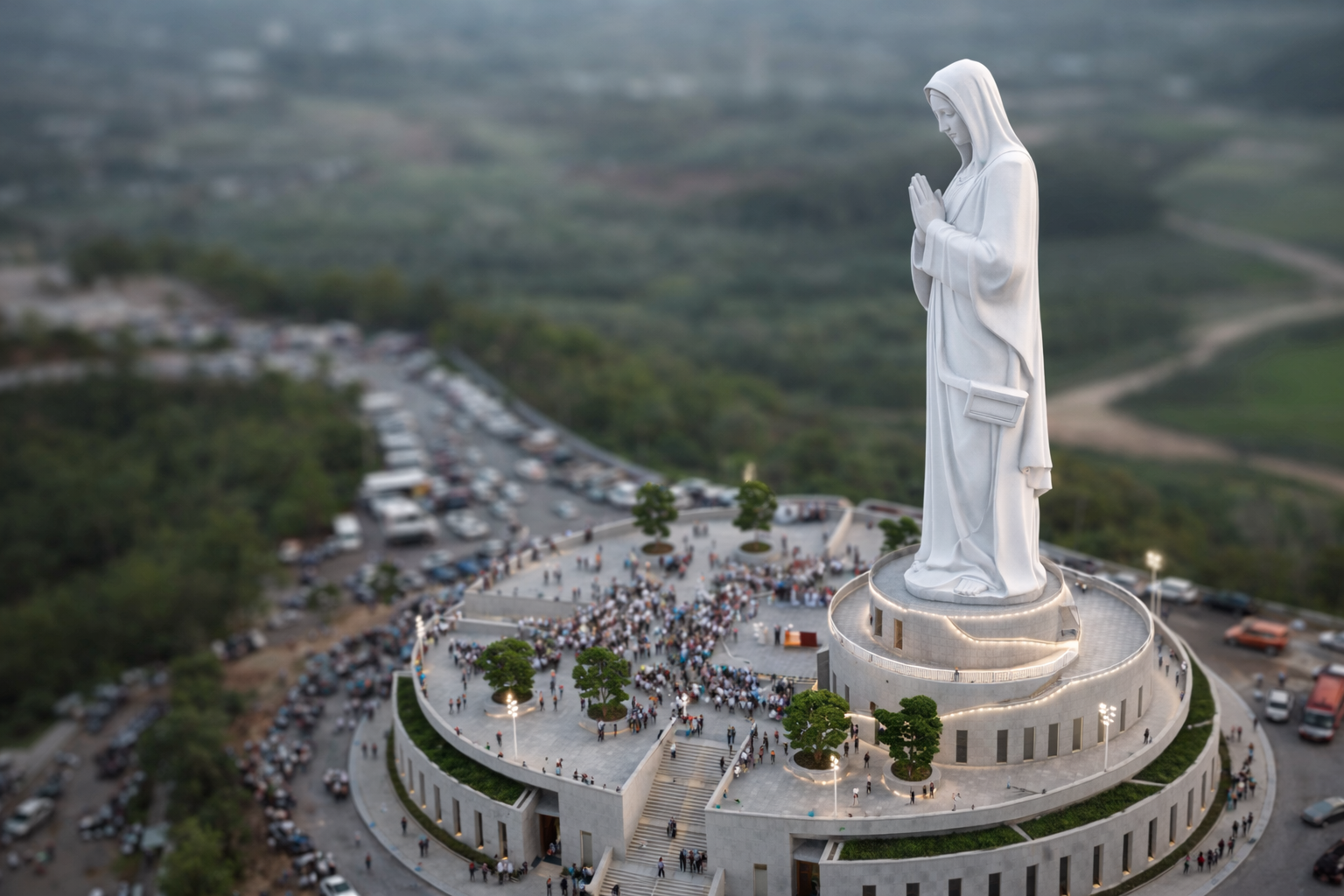
This is undoubtedly a positive sign. The human longing for transcendence and spiritual meaning has always been an essential part of human existence. When developed with the right vision, pilgrimage centers can become sacred spaces where people encounter God, regain balance in their lives, and experience spiritual consolation.
At the same time, the rapid development of pilgrimage centers invites a deeper reflection on their true meaning and core identity.
According to the Church’s tradition, a pilgrimage site is not simply a large religious structure. Most renowned pilgrimage destinations throughout the world emerged from a specific historical context, often linked to extraordinary events, powerful testimonies of faith, or devotional traditions preserved across generations. These elements form the very soul of a pilgrimage site.
Pilgrims do not travel merely to admire impressive architecture or expansive plazas. What draws them is the faith story preserved in a particular place—the enduring signs of God’s presence or the maternal intercession of the Blessed Virgin Mary—which have inspired and sustained the spiritual lives of countless believers through the years.
From the perspective of the sociology of religion, every institution requires a distinct identity in order to endure. Pilgrimage centers are no exception. Without a strong historical foundation, unique spiritual significance, or a deeply rooted devotional tradition, such places risk becoming little more than religious destinations. The structures may remain impressive and the surroundings attractive, but their spiritual appeal may prove difficult to sustain over time.
History demonstrates that pilgrimage sites with lasting vitality are rarely distinguished primarily by the scale of their construction. Rather, they are known for the spiritual treasures that generations of believers have entrusted to them. It is this living memory of faith that creates an enduring attraction—one that no architectural achievement alone can replace.
This does not mean that the establishment of new pilgrimage centers should be discouraged. On the contrary, in a world where people increasingly seek spaces for prayer and reflection, the creation of such sacred places is both valuable and commendable. Yet an authentic pilgrimage center cannot be built solely through financial resources, engineering expertise, or monumental structures. It must also be shaped by the faith life of the community, by history, by spiritual experiences, and by the ongoing pilgrimage of God’s people.
Therefore, the most important question is not how many pilgrimage centers are constructed, but what spiritual value each one offers to the faithful. A building may be completed within a few years, but a true pilgrimage site often requires generations to grow, mature, and reveal its deepest significance.
Ultimately, what remains in the hearts of pilgrims is not the height of a monument, the size of a plaza, or the grandeur of architectural structures. What endures are the traces of faith they encounter there. This is why a pilgrimage center must be more than brick and concrete. It must possess a soul—one formed by history, nourished by communal memory, and sustained by the living witness of faith across time.
Thanh An
RELATED POSTS
- 01 From the Destiny of a Nation to the Life of the Church: The Enduring Relevance of the Spirit of “Every Citizen Bears Responsibility”
- 02 More Than Half a Century of FABC: Time for a Transparent Report to the People of God
- 03 A $0.20 Cake and a Catholic Student’s Dream of Higher Education
- 04 Cardinal Luis Antonio G. Tagle Arrives in Vietnam to Preside Over the Beatification of Father Francis …
- 05 Millions Turn Their Hearts Toward Tac Say as Father Truong Buu Diep Is Declared Blessed